

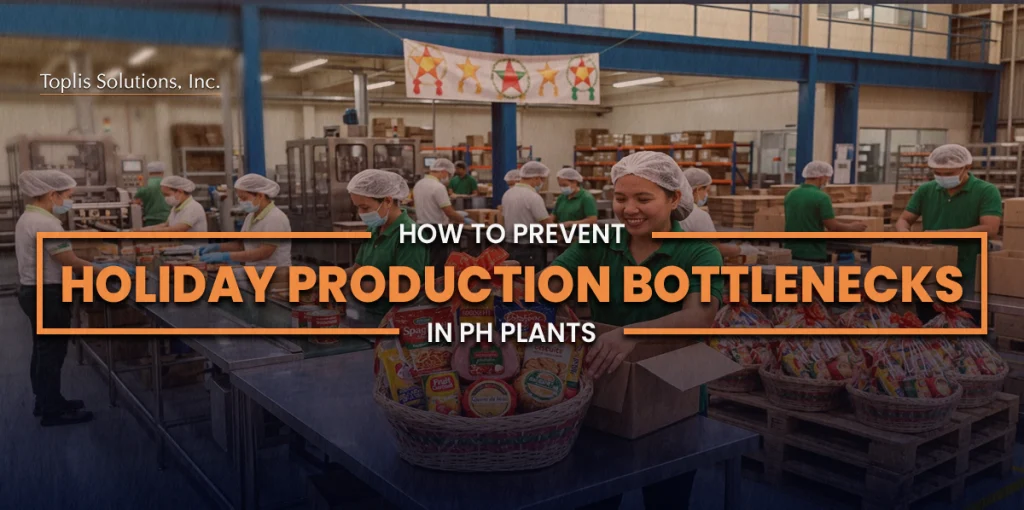
Every year, the Ber months arrive faster than most production plans expect. Orders for Noche Buena items, gift packs, and holiday promos begin piling up in September. By November, many manufacturing lines across Laguna, Cavite, and Metro Manila run at their absolute limit.
That is when holiday production bottlenecks in the Philippines truly begin. One missing line operator, one late packaging delivery, or one slow station can hold back an entire shift.
This guide is written for consumer goods and FMCG producers. It explains why delays happen in the Philippines and how to reduce production bottlenecks before they start. It also covers holiday pay rules, compliant hiring, and a simple checklist you can use every year. Whether you run one plant or several, these steps can help you finish the year on time.
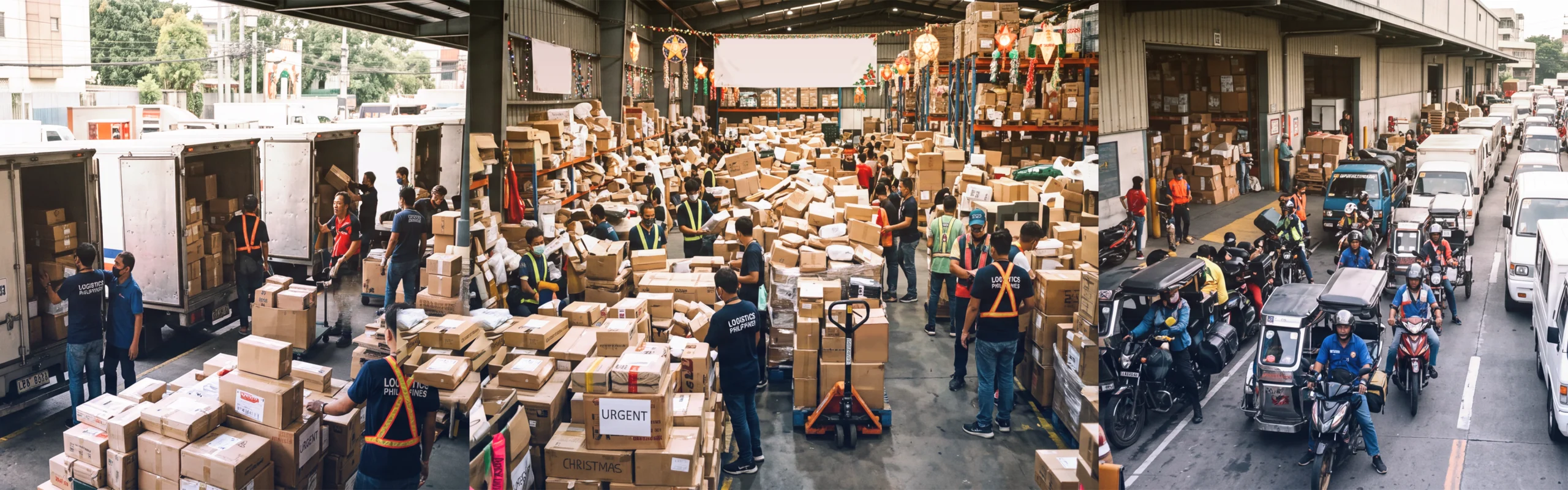
Why Do Bottlenecks Spike During the Philippine Christmas Season?
Bottlenecks spike because peak demand rises faster than plant capacity. In the Philippines, the Christmas season starts early, so pressure builds for months, not weeks.
Retailers want stock on shelves before shoppers arrive. Online sales events like 11.11 and 12.12 add another surge. Distributors in general trade and modern trade also place larger orders with tight delivery dates.
Your production line has fixed limits. A packaging station can only run so fast. A shift can only cover so many hours.
When orders outgrow those limits, one step becomes the constraint. Everything behind it waits. Finished goods pile up in one area while another area sits idle. Late deliveries follow, and late deliveries can cost you shelf space.
The plants that struggle most start planning only after the first big order lands. The good news is that most of this is predictable. The calendar does not change. Your planning can start early.
What Usually Causes Holiday Production Delays?
Most delays trace back to four causes. Seeing them clearly makes them easier to fix:
 Peak Season Labor ShortageThere are not enough skilled people at key stations. Absenteeism also rises near the holidays, as workers file leave to travel home to the provinces.
 Material and Packaging DelaysSuppliers face the same rush you do. The average lead time stretches, and one late delivery can stop a line.
 Equipment StrainMachines that run longer hours break down more often. Skipped maintenance in October can cost days in December.
 Logistics ProblemsTyphoon season, port congestion, and truck bans in Metro Manila slow down complex supply chains. PAGASA weather bulletins are worth checking when planning delivery routes.
Labor shows up often on this list. A line without enough trained people cannot use its full capacity, even when materials are ready. Workforce planning deserves as much attention as machine planning.
How Do You Build a Seasonal Workforce Plan Early?
Work backward from your busiest peak season weeks. Run your demand forecasting first, then decide how many workers each station needs.
 Review last year’s dataCheck output, overtime hours, and absences from October to December.
 Map your constraint stationsFind the stations that slowed you down, and staff those first.
 Set headcount targets by weekDo not use one number for the whole season, as seasonal demands rise and fall.
 Plan for absencesAdd a small buffer for leave and sick days, especially in December.
 Pick your hiring windowSettle plans between June and August so recruiting and training are not rushed.
Bring production, HR, and finance into the same conversation. When they plan in separate rooms, gaps appear.
To handle sudden order spikes without overworking your full-time employees, many plants use seasonal staffing support on production lines during peak weeks.
Manufacturing Manpower
Overtime or Additional Workers: Which Costs Less During the Holidays?
Overtime feels like the fastest fix, but it is not always the cheapest one.
Holiday premiums add up quickly. Under Proclamation No. 1006, December 25 and December 30 are regular holidays in 2026. December 8, December 24, and December 31 are special non-working days. Work on a regular holiday is paid at 200% of the baseline daily wage for the first eight hours. Work on a special non-working day is paid at 130%. Overtime hours carry further premiums on top of the standard hourly rate.
Long overtime also has a hidden cost. Tired workers make more mistakes, and quality can slip. Output per hour often drops in the final weeks of the year.
Then there is the 13th-month pay. Employers must release it to eligible rank-and-file workers no later than December 24. Some workers resign or take extended leave after the payout, so expect a dip in January.
Adding temporary workers or seasonal hires for peak weeks often spreads the workload better. Shifts stay shorter, and quality stays steadier. Ask your finance team to model both options for your busiest three weeks before you decide. Pay rules can change, so check the latest advisories on the Department of Labor website.
How Can You Hire Seasonal Workers Compliantly?
Speed matters when hiring seasonal workers, but staying within the law is vital. A rushed hire can create legal issues later.
If you work with an outside staffing agency, choose a legitimate service contractor rather than unverified independent contractors. Under DOLE Department Order No. 174-17, labor-only contracting is prohibited. In plain terms, the contractor must be a real business with its own capital, real control over its workers, and a clear service agreement.
Before signing with a staffing partner, ask a few direct questions:
- Is the provider registered with DOLE?
- Does it pay wages, benefits, and government contributions on time?
- Can it show who supervises its seasonal staff on site?
- Does it have experience with plants like yours?
When an employee works on your factory floor, treat them with respect from day one. Fair treatment leads to better attendance and steadier output. If you already know your timeline and headcount, you can share your requirements with our team.

How Do You Onboard and Cross-Train New Workers Fast?
A new worker does not need to learn everything on day one. Teach the one or two tasks that matter most during peak weeks.
Keep sessions short and hands-on. Pair each newcomer with an experienced operator for the first few shifts. Post simple visual guides at each station, and cover safety first.
Cross-training helps just as much. When an operator can cover two or three stations, an absence no longer stops a line. Start in quieter weeks, well before the rush. Check progress at the end of each shift to catch small problems before they grow.
A 90-60-30 Day Holiday Readiness Checklist
Count backward from your first peak week:
90 Days Out
60 Days Out
30 Days Out
Frequently Asked Questions
When should Philippine manufacturers start planning for the Christmas rush?
Ideally between June and August. That leaves time to forecast demand, recruit short-term workers, and train staff before the Ber months begin.
How much is holiday pay for factory workers on Christmas Day?
Christmas Day is a regular holiday. Employees who work are generally paid 200% of their daily wage for the first eight hours. Check the latest DOLE advisory for your exact case.
Is overtime or additional workers better during peak season?
It depends on cost and quality. Overtime is quick but expensive and tiring. Additional trained workers often cost less over several weeks and protect output quality.
What is labor-only contracting?
It is a prohibited arrangement under DOLE Department Order No. 174-17. A contractor simply supplies workers without real capital or direct control over the work.
Conclusion
Holiday bottlenecks are rarely a surprise. The calendar is fixed, and the causes are well known. What makes the difference is how early you plan and how well you prepare your people.
This is where a dependable partner matters. Toplis Solutions Inc. has supported Philippine businesses since 2004. It is a recognized member of the Philippine Association of Legitimate Service Contractors and is ISO-certified, with coverage across Luzon, Visayas, and Mindanao.
For producers who need extra hands during peak season, Toplis offers manufacturing manpower support backed by compliant, well-run processes.
Start small if you need to. Pick one constraint station, one hiring decision, and one date on the calendar. Then build from there.
Planning a busy quarter? Talk to the Toplis team today and tell us what your lines need.
Talk to the Toplis Team